The short answer
From a qualified lead, meaning the form was submitted and the passcode entered, to an application submitted to a lender, expect about 15%. Floors have made it work at 10%, and some run in the low twenties. It is the first number on the list that the ad account cannot move: below 10% the problem is the floor, not the leads, unless the definition of qualified changed.
Every number above this one on the list belongs to the campaign. This one belongs to the floor. It measures how many of the merchants who cleared the gates and entered the passcode went on to have a file submitted to a lender, and the ad account has nothing to say about it.
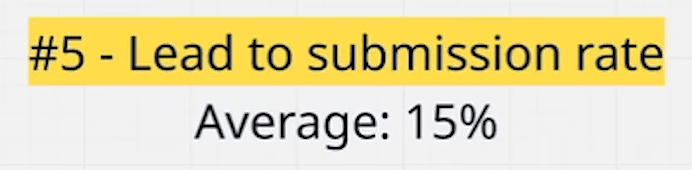
| Lead-to-submission | Reading |
|---|---|
| About 15% | The benchmark. Roughly one submission per seven qualified leads. |
| 10% | Floors have made it work here, with a good funded rate on what does submit. |
| Low twenties | The high end we have seen, on a floor that asks for statements on the first call. |
| Under 10% | A process problem: speed to lead, the statements ask, or the cadence. |
What “lead” means in the ratio
The rate only means something if the numerator and denominator are fixed. The denominator is a qualified lead: revenue band cleared, time in business cleared, statements available, the six-digit code entered from the merchant’s own phone. The numerator is a file submitted to a funder. A floor counting raw form fills in the denominator will read 5% and conclude the leads are bad; a floor counting “sent the merchant an application link” in the numerator will read 40% and conclude nothing.
What moves it
- Speed. A median time to first dial in minutes rather than hours is the single biggest lever, because the merchant confirmed the number minutes before delivery.
- The statements ask. The biggest leak in the whole funnel sits between a qualified conversation and receiving bank statements, and it is entirely a process fix.
- Cadence. Most floors stop at two attempts and most connections happen after that. A follow-up cadence that actually completes moves the rate more than any script.