The short answer
Send a text before the first call. It puts a name on the number that is about to ring, it tells the merchant which application you are calling about, and it gives them a way to reply “call me in thirty minutes” instead of declining you. It does not guarantee the pickup — iPhones can file texts from unknown numbers out of sight — so call straight after, and double dial if they do not answer.
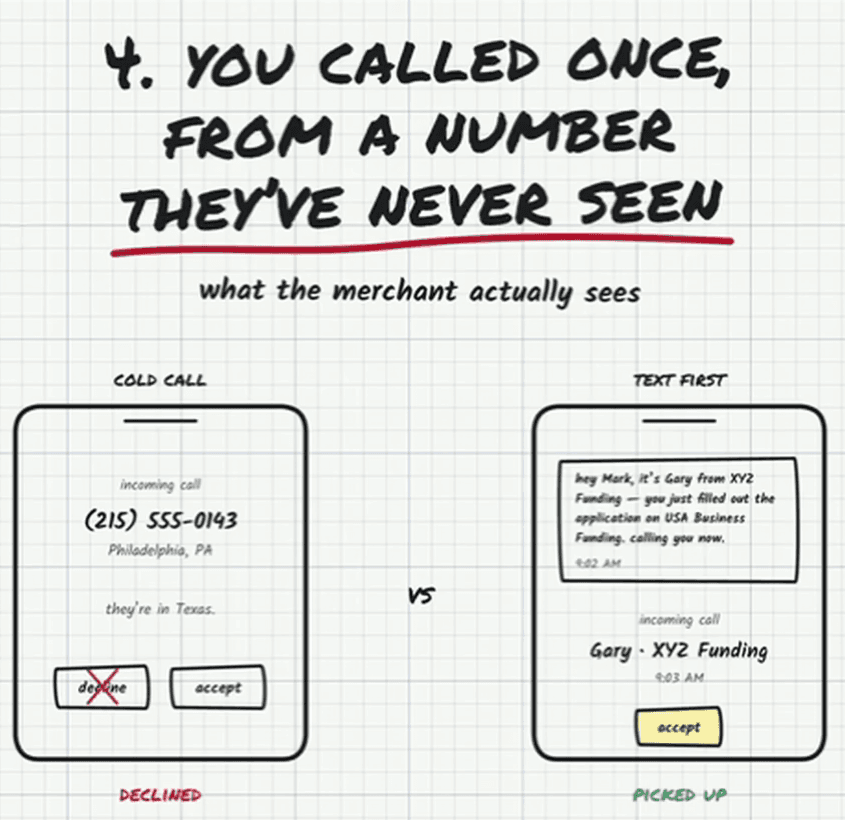
The fourth reason leads do not pick up is the most ordinary one. The merchant’s phone lights up with a number they do not know, from a city they are not in, and they do what anyone would. Alex’s test is to ask yourself honestly whether you would pick it up — and a landscaping company doing $50K a month in Louisiana does not.
What to send
Short, from the rep, about the application, sent the moment the lead lands and a minute before the call. Alex’s version: “Hey Mark, it’s Gary from XYZ Funding. You just filled out an application. I’m looking at it right now. Just giving you a call right now.” The board’s version adds the one thing that matters when the merchant has applied in more than one place — the name of the site they applied on.
| Part of the text | Why it is there |
|---|---|
| The merchant’s first name | It is about them, not a broadcast |
| Your name and company | The call that follows arrives with a name on it |
| “You just filled out an application”, and where | They know which of the calls this is |
| “Calling you now” | The ring a minute later is expected, not a surprise |
What it changes is the thing on the screen. With a text first, the call is from Gary, who just messaged about the application, rather than from an unknown number in Philadelphia. It also opens a second channel. Some merchants will not pick up but will reply — “I’m with a client, can you call me in thirty minutes?” — and that reply is a booked call, which is how a text turns into speed to lead rather than a delay.
What the text cannot do
It does not always land. iPhones can file texts from unknown senders into a separate list the merchant may never open, and in Alex’s experience most of the merchants you call are on iPhones, so the text raises your odds rather than saving you. That is why it goes first and the call goes straight after, never the text instead of the call — and why one call after it is still not enough. Getting merchants to answer an unknown number covers the rest: the double dial, local numbers, FaceTime audio.
The timing is the same rule as everything else in the video: within a minute of the lead landing, not after lunch. A text sent fourteen hours late with a name on it is still fourteen hours late, and speed to lead decides whether the merchant remembers the application it refers to.