The short answer
Friction on an application page is only good when the people it removes are the ones you did not want. A mobile one-time passcode and an email verifier remove fakes, VoIP numbers and mistyped addresses and hold spam to one to three percent. Slow pages, document upload, captcha and desktop-first layouts remove real merchants — eighty to ninety percent of whom are on a phone — and add nothing to quality. The bank statement upload used to sit on the line between the two; session recordings settled it, and it belongs with the bad.
The version of this brokers get wrong is not too little friction. It is treating all friction as the same thing, and adding the kinds that cost merchants without removing anyone you would not have called.
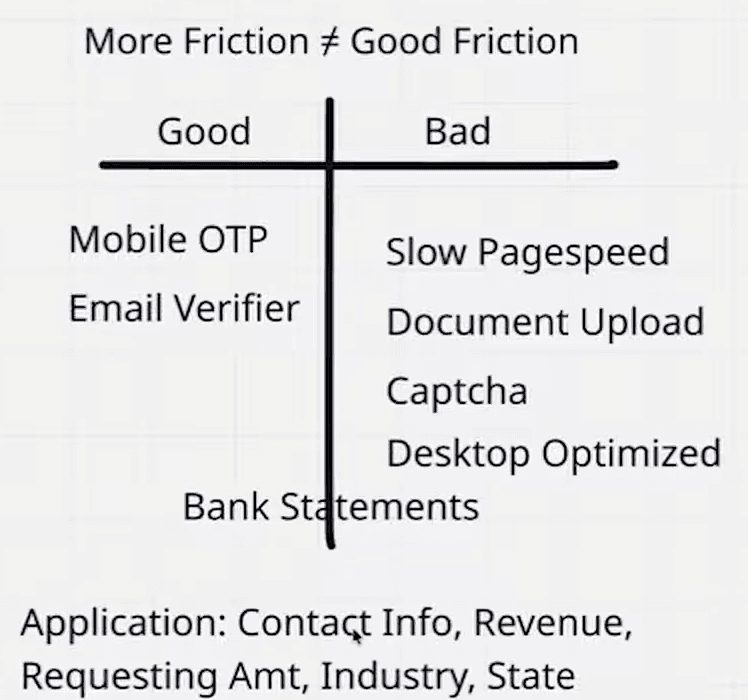
Good friction
| Step | What it removes | What it costs |
|---|---|---|
| Mobile one-time passcode, at the end | Fakes, mistyped numbers, VoIP, landlines, company lines | Some completion — only from people who could not receive a code |
| Email verifier | Dead and made-up addresses, via a third-party check that the address is live | Almost nothing |
| Revenue and amount bands | Merchants below the floor, before they become a record | Volume you did not want |
The passcode goes at the end: the merchant completes the application, a six-digit code goes to the number they gave, and until it is entered the application does not submit and no record exists. On our funnel and most of our clients’, that plus the email check holds spam to one to three percent of submissions, across hundreds of thousands of leads.
In the essentials video it is the first of five things a Meta campaign needs, and Alex calls it the lowest-hanging fruit in the account: about an hour to set up and test, with Twilio sending the code. He goes further on spam there too, saying none at all comes through his funnel; the one to three percent above, measured across hundreds of thousands of leads including clients’ funnels, is the number to plan with. And he adds a second reason the drop-off is worth it. A merchant who types a code back has shown more intent than one who answered a few questions, and the cheapest leads — disconnected numbers, people nobody can reach, people who submitted by accident — are the ones that end up costing the most.
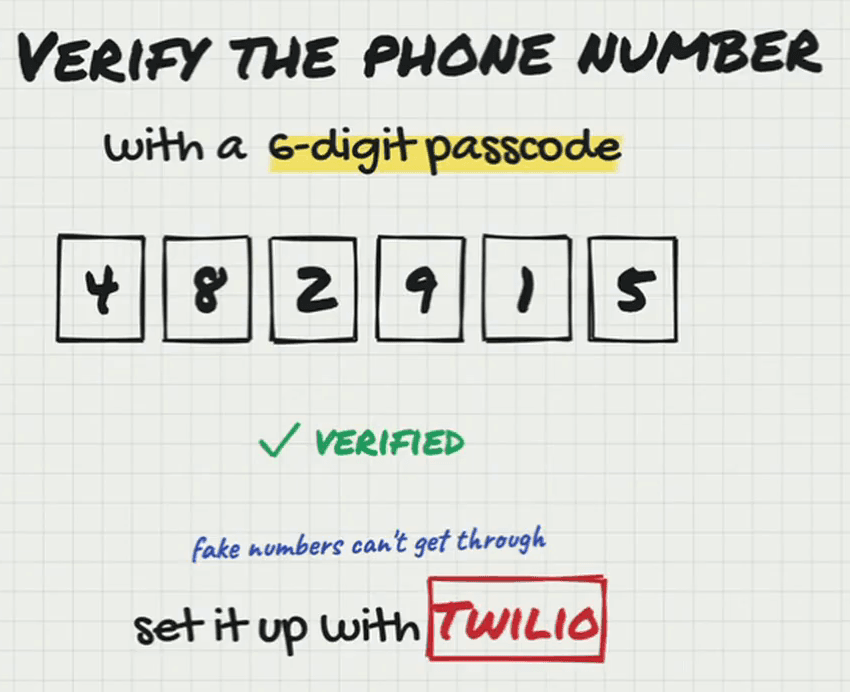
It is also the only pickup problem that cannot be fixed on the phone, which is why it belongs on the form: a floor can dial faster, but it cannot call a number that belongs to nobody. Buying rather than building, the same point becomes a vendor question — whether the numbers are OTP-verified or merely validated, and whether the vendor can prove it on every lead.
Bad friction
- Slow page speed. There is no quality argument for it; it is just a page nobody finished building.
- Document upload, including bank statements. Merchants were watched reaching the upload step and leaving, so it came off our own form: cost per lead fell and quality went up. Plaid is the least bad version, because it is a login rather than a document hunt, but it is a narrow exception rather than a default.
- Captcha. Removes nobody worth removing and adds a step for everyone. The passcode already does the job.
- Desktop-first layout. Eighty to ninety percent of the traffic is a phone. A form built for a desktop and squeezed onto a screen loses conversions it never sees.
How you find out which is which
Not by arguing about it. Microsoft Clarity records every session on the page, submitted or abandoned, and shows where people stop. A step that loses forty percent of real merchants at the same point every time is bad friction whatever the theory says.