The short answer
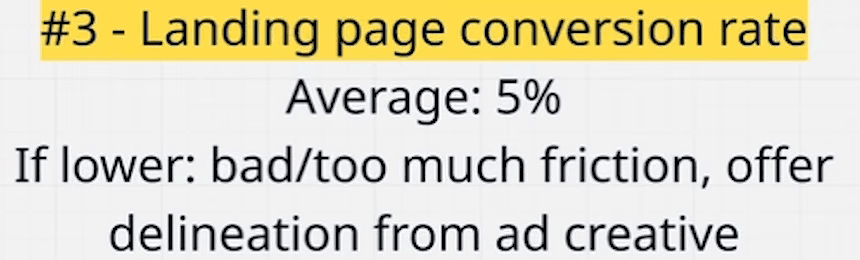
Of everyone who lands on the application page, about 5% should become qualified leads: a hundred visitors, five submissions that clear the gates. At 2 or 3% the usual causes are too much friction on the form, or offer dilution, where the page says something different from the ad and people leave. Definitions vary, so measure landings to qualified leads, not landings to any submission.
Landing page conversion rate is the handover from the ad to the page, and it has a definition problem: there are half a dozen things people mean by it. The one worth managing is the share of everybody who lands who becomes a qualified lead. Not a form start, not a form fill, a submission that cleared every gate and the passcode.
| Landings to qualified leads | Reading |
|---|---|
| 5% | The benchmark. One hundred land, five qualify. |
| 2 to 3% | Too much friction, or the page is not saying what the ad said. |
| Well above 5% | Check what “qualified” means before celebrating. A page with no gates converts at any number you like. |
The two usual causes
- Friction. Slow load, a document upload, a captcha, a desktop layout on a phone. The good-friction-versus-bad-friction test: a one-time passcode earns its drop-off because it removes junk, and nothing else on the form has earned it.
- Offer dilution. The ad said one thing and the page says another, and the merchant who arrived expecting the first bounces at once. The page has to keep the promise the creative made, in the same words, above the fold — the same offer and the same numbers from the ad through to the call.
Why the rate is not the goal
A form with no revenue band, no time-in-business question and no passcode converts far better than 5%, and every extra percentage point is a merchant nobody can fund. The application page is optimised for the number of records that clear qualification, not for the conversion rate, which is why the benchmark is stated against qualified leads rather than submissions. The rate is a diagnostic for the page; the cost per lead and the funded rate are what it feeds.