
The case against UCC data is usually made on price per funded deal. There is a simpler case underneath it. The list is the targeting, and a list built from public filings knows almost nothing about the merchant on it.
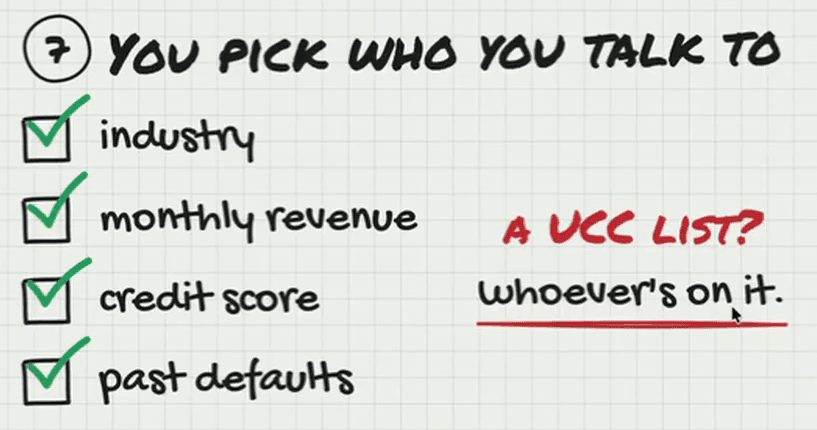
You pick who you talk to
A real-time lead arrives with the merchant’s industry, monthly revenue, credit score and past defaults, so the rep knows who they are calling before the phone rings. The criteria are also inputs. Do not want trucking companies? Leave them out. Only want 700-plus credit? Set it. Want homeowners because you sell HELOCs? Target them. A UCC list cannot take an instruction like that, because nobody on it told anybody anything.
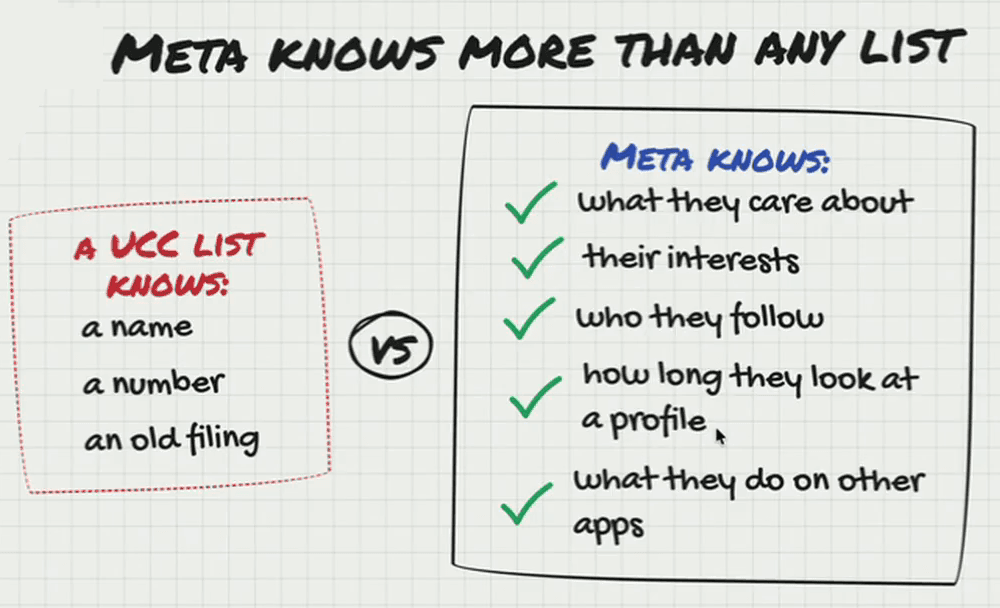
What each one knows
| A UCC list knows | Meta knows |
|---|---|
| A business name | What they care about |
| A phone number, often appended by a third party | Their interests and who they follow |
| An old filing: they borrowed once | How long they look at a profile, an ad or a video |
| What they do on other apps |
Meta knows these merchants, in Alex’s phrase, like the back of its hand, and it knows the rest of us too. The question he puts to brokers is which of the two is more likely to put a better merchant on the line. A filing says a business took secured funding at some point. It says nothing about whether they need money now, which is the only thing that matters on a cold call.
That loop only works if the right leads go back, which is why disqualified leads never go to Meta and why what you send decides the next two weeks. The result is the $1,000 worked example: a known spend, a known number of leads and a close rate you can plan against. The UCC versus real-time comparison puts it next to the price argument.
Questions brokers ask
What information is on a UCC lead?
A business name, a phone number that is often appended by a third party, and an old filing showing they took secured funding once. Nothing about revenue, credit, defaults or whether they need money now.
Can I choose which merchants I get with real-time leads?
Yes. Industry, monthly revenue, credit score and past defaults are on the lead before you call, and they can be set as criteria: no trucking, 700-plus credit, homeowners for HELOCs.
Why is Meta better than a list for finding MCA merchants?
Because it knows behaviour a list cannot: interests, who they follow, how long they look at an ad or watch a video, and what they do on other apps. A list knows they borrowed once.
How do real-time leads become predictable?
The leads sent back to Meta through the data set shape the next week or two of leads. Send back qualified ones and the quality holds, until the deals a batch will close can be estimated from its size.
Is a UCC list good targeting?
It is targeting, not intent: it tells you a business borrowed before. It cannot be filtered on revenue, credit or defaults, and it cannot learn from the merchants who funded.
Reference
Watch: why you should stop buying UCC dataPicking who you talk to at 10:30, and what Meta knows at 13:33.

Alex Makowski
Founder, Infinite Bookings
Runs the lead generation operation behind Infinite Bookings — paid traffic, the funding application, and the delivery pipeline that puts records into brokers’ CRMs.
Reachable directly at alex@infinitebookings.com or 732-609-7182.