The short answer
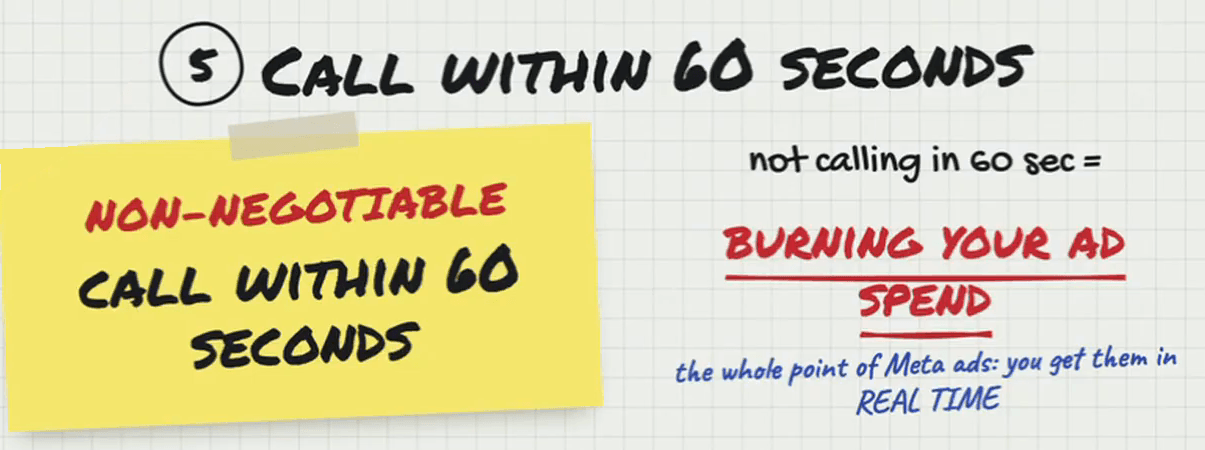
A real-time exclusive lead is bought at a premium — about $50 to $200 a lead depending on who you buy from — for one reason: you reach the merchant the moment they opt in, before anyone else does. Call within sixty seconds and you get what you paid for. Call in five minutes, an hour or the next day and you are burning the ad spend on what is by then an aged lead. Of the five essentials for a Meta campaign, this is the one Alex would pick if he could pick only one, and he will not sell real-time leads to a floor he does not think will do it.
An aged lead and a real-time lead can be the same merchant. The difference is when you reach them, and that difference is the whole premium. An aged lead is priced to be called whenever. A real-time exclusive lead is priced on the assumption that your phone rings while the merchant is still holding theirs.
What the premium buys
| Aged lead | Real-time exclusive lead | |
|---|---|---|
| What it costs | Cents to a few dollars a record | About $50 to $200 a lead, by source |
| When it can be called | Whenever | Now |
| Who has called already | Usually several brokers, over weeks | Nobody, if you are first |
| What the merchant remembers | Often nothing | The form they submitted a minute ago |
| Called an hour later | No different | An aged lead, at the real-time price |
The whole point of running real-time exclusive leads off Meta, in Alex’s words, is that the moment the merchant opts in on the landing page, on their phone, you are calling them and helping them and nobody else is. That moment is what the extra dollars pay for. Calling in five minutes, an hour or the next day keeps the price and throws away the product, which is why he calls it the highest level of waste in the account.
Why five minutes is already late
The usual target, ours included until this video, is five minutes with sixty seconds as the stretch. The video moves the line: sixty seconds is the standard and five minutes is already burning the spend. The reason is the competitor. On the pickup-rate board the first other broker calls one minute after submit, and nothing stops the merchant filling in other applications the same morning. Exclusive means nobody else buys your record; it does not mean nobody else is dialling.

Alex makes the same point in the UCC data video: it is simple but not easy. A lead that lands at 8pm, on the drive to the gym or at 5am still gets called, because not calling in sixty seconds is lighting the $60 on fire. Exclusive makes it matter a little less, since nobody else is calling, and still just as important.
Adjust the floor to the lead
- Take delivery by webhook straight into the CRM, not a sheet or an email. Sixty seconds does not survive a step where somebody has to look.
- Assign to a named rep with an alert that interrupts, and keep reassignment after five minutes as the safety net rather than the target.
- Only take delivery in hours somebody is there to dial. A real-time lead that lands at 6am in an empty office is an aged lead by nine.
- Measure time to first dial by rep in seconds, not hours, and read the median.
If Alex had to pick one of the five essentials, this is it: by far the highest-leverage way to make more money from ads already paid for. The other four — the passcode, the pixel, budget and creatives and drop-off tracking — decide which merchants arrive. This one decides whether you are the broker they talk to.